




Overview
Where are the prime locations to witness the Migration?
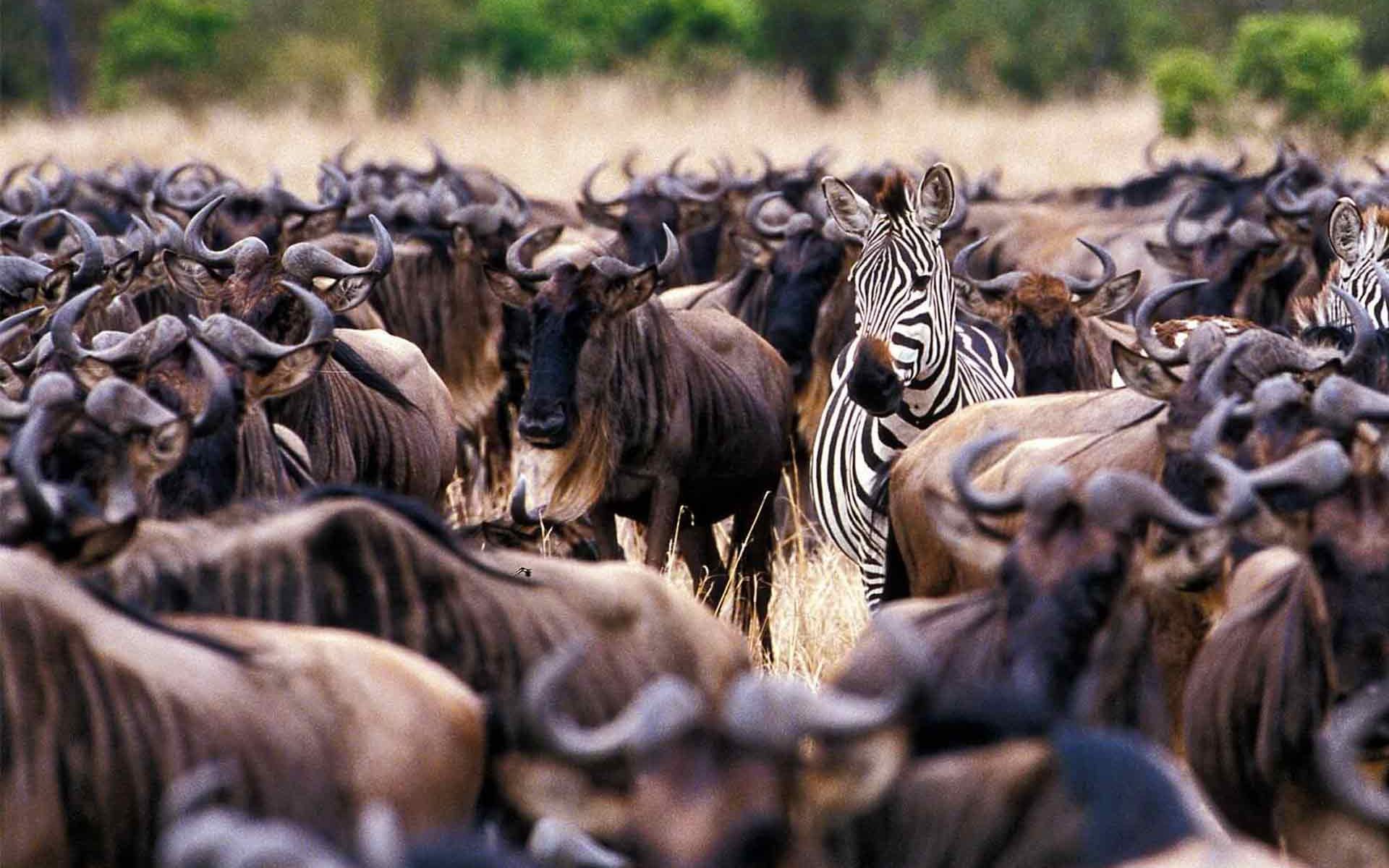
The wildebeest migration occurs year-round, presenting opportunities for observation in any given month; the key lies in knowing where to focus your attention! The real inquiry should revolve around identifying the optimal locations to observe them during specific times of the year.

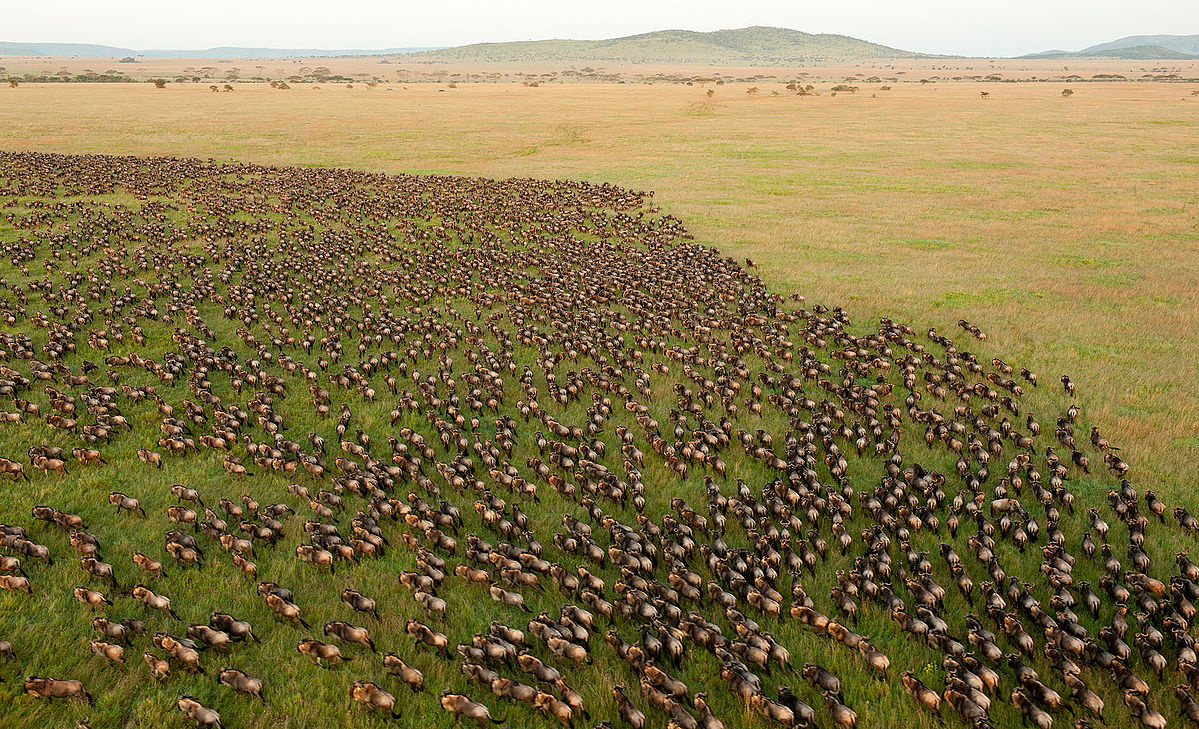
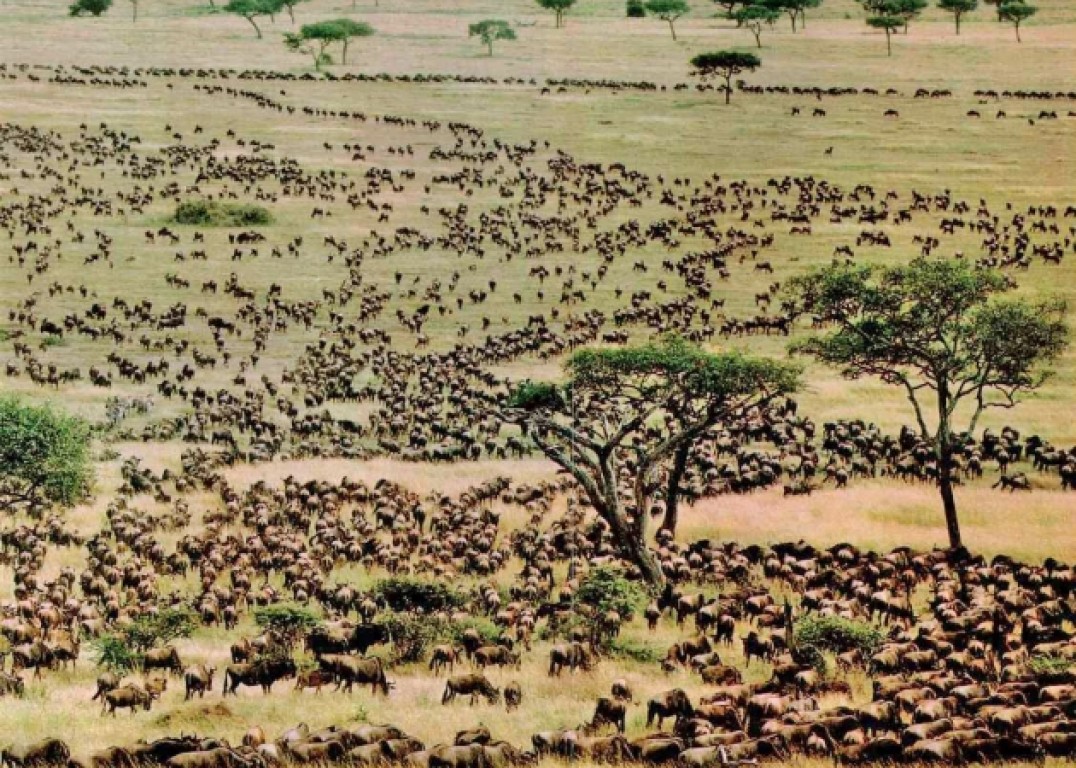
The Serengeti Migration Cycle:
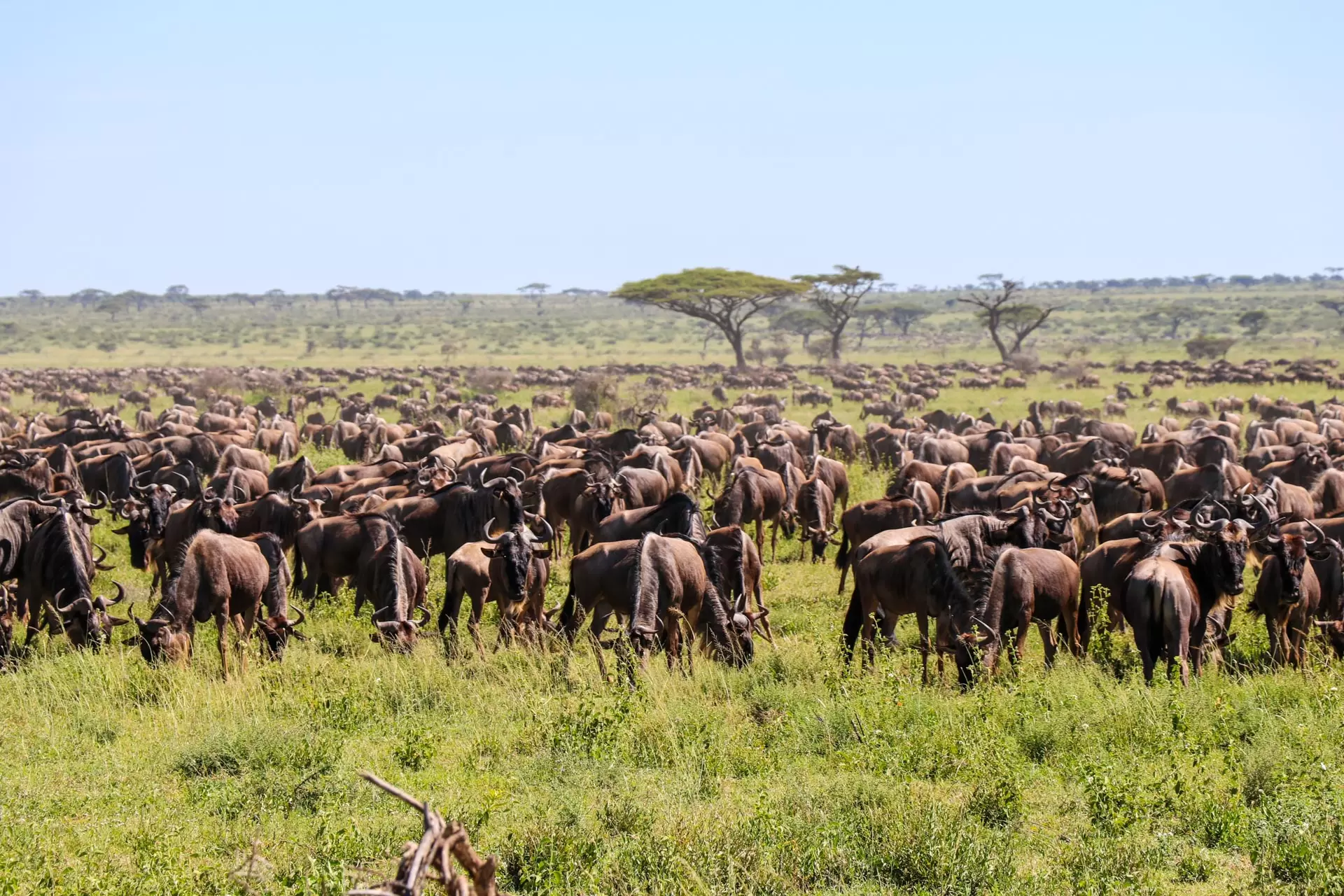
In early November, the short rains mark the beginning of a significant shift in the Serengeti ecosystem. As November progresses into late November and December, the short grass plains near Seronera, particularly around Ndutu in the south and east, witness the arrival of numerous animals.
Moving into January, February, and March, the animals remain in this area, with the majority of wildebeest calves being born in February. During this period, approximately, 8000 foals are born each day for about three weeks.
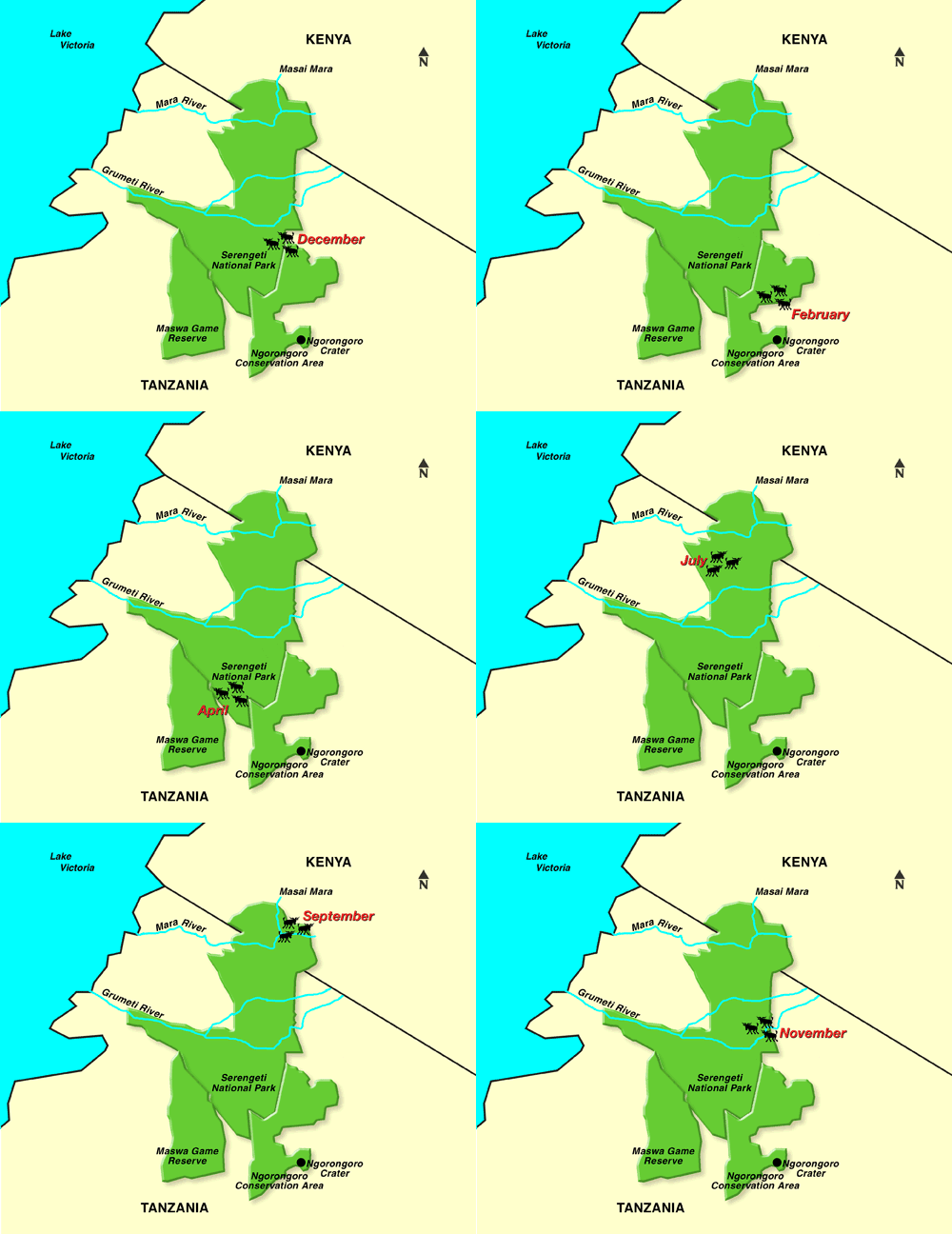
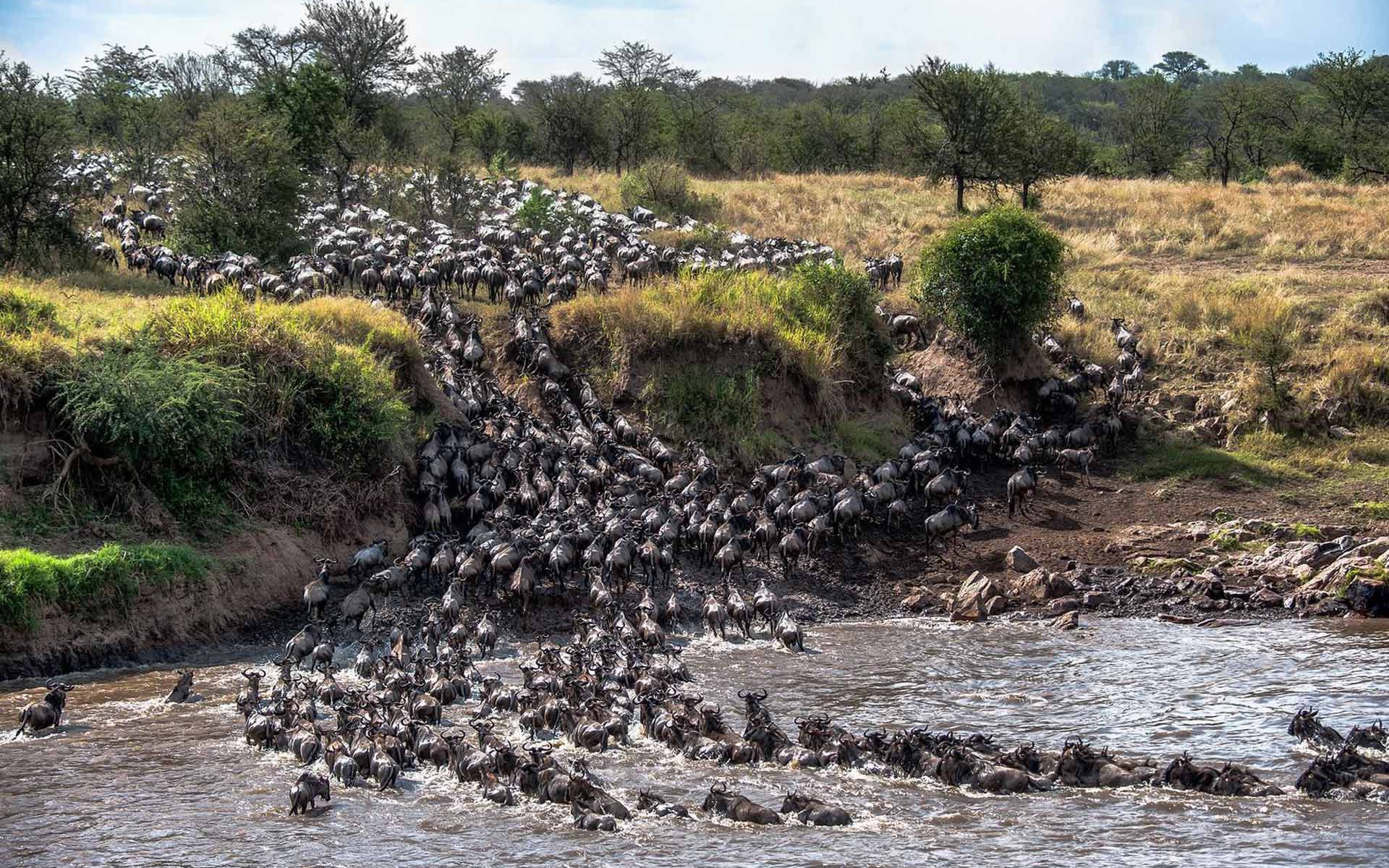
As April and May unfold, the animals embark on their remarkable migration northward in search of fresh grazing and water sources. By June, they gather on the south side of the Grumeti River within the Western Corridor. Here, the river, typically comprised of pools and channels, becomes a focal point where the Grumeti River’s large crocodiles seize the opportunity for an annual feast. While these river crossings are not as dramatic as those at the Mara River in the north, they remain noteworthy.
July and August witness the continued northward movement of the migration, often dispersing across a broad area. Some animals traverse through Grumeti Reserve and Ikorongo, while others journey north through the heart of the Serengeti National Park.
In September, the herds extend across the northern reaches of the Serengeti, encountering the Mara River, which poses a significant obstacle. This river flows forcefully through the northern Serengeti from Kenya’s adjacent Maasai Mara Game Reserve, presenting a spectacle for fortunate observers who witness the crossings.
By October, the herds commence their southward migration once again, passing through western Loliondo and the Lobo area of the Serengeti National Park. They return to the rejuvenated greenery that follows the rains on the short-grass plains of the southern Serengeti.
Where will the migration be: Planning your Safari
The aforementioned is provided solely as guidance. Naturally, you are more than welcome to extend your stay with additional nights if you so desire.
What Our Clients Say?
TESTIMONIALS
Verified Excellent experience If you want an excellent Safari experience, don’t fuss about whether to choose expensive or cheap accommodation, but choose your guide very carefully.Eman (Emanuel Edwards) is an expert and careful driver, who avoids as many ruts and potholes as possible for our comfort, and an incredible navigator, who can find his way across the plains without so much as a wrong turn. But most importantly, he has a vast knowledge of the animals and birds of Tanzania.He is calm, patient, kind, considerate and wears a fine snaggletoothed smile. His main concerns are our safety and satisfaction, alongside a preservation of the wonderful areas through which he guides us. He is no high-fiving, foolish, jabbering joker, but a perfectly relaxed, polite gentleman with whom you feel immediately at ease and safe in his hands; very important when you are spending a few days with somebody.He speaks very good English and seems to instinctively know how much information you want about the animals and birds which he can spot at great distance and with great ease, even when hidden in the bush.My advice; choose Eman.Posted onVerified Great experience The safari is great and wonderful!The whole trip is smooth and good arrangement!Even have some problems during the safari, they always can fix it asap.The guide is humorous and friendly.Hope to join them again later one day.Posted onVerified An amazing safari in Tanzania Thanks for our tour guide Emmanuel gave us an unforgettable safari tour, introducing various animals knowledge and the culture of Tanzania with professional.Posted onVerified Awesome safari Samora Explorers is an awesome tour operator. They are doing the best for their customers and made our safari magical. All the time we needed something before or during the safari, Iddy answered immediatly. He really looks at his customers and only wants the best for them. We got an amazing safari and our guide Regie did a great job. Even if we had any questions or needed help he was there. He did everything to make our safari awesome and he was able to speak german really well. Samora did a great job and we will tell all our friends about that. I can only recommend them and love it to think about this safari. Just magical.Posted onVerified Tour of Serengeti Park, Ngorongoro Conservation Area and Tarangiri Park The views were amazing, the driver Benjamin super friendly. Also lodges and camps were nice and comfortable. If you are looking for an adventure in the savana, Samora is a good choice. You will also be provided with every meals (except for evening drinks) and with water, soft drinks and also bear during all the tour. If you go during Tanzanian winter, my advice is to take with you warm hoodie and jacket, because especially during the moring could be very cold. Also the transfer from Kilimanjaro airport was included.Posted onVerified Amazing Safari experience for our Honeymoon We had an absolutely incredible experience with Samora Explorers Safari Company and can’t recommend them highly enough. From the moment we first got in touch, Iddy was fantastic—so easy to communicate with, always quick to respond, and incredibly helpful in customizing our safari to perfectly suit our preferences and schedule. He made the whole planning process feel smooth and stress-free, which was especially appreciated as we were organizing our honeymoon.Over the course of our 6-day safari, every detail was thoughtfully arranged. The accommodations were all excellent, each offering something unique—from stunning views and peaceful surroundings to warm hospitality and comfortable rooms. We were also consistently impressed with the quality of the food throughout the trip—delicious, varied, and always plentiful, whether at the lodges or packed picnic lunches on the road.A very special mention goes to our guide, Hamadi, who was truly outstanding and played such a huge part in making our honeymoon unforgettable. From start to finish, Hamadi was brilliant—friendly, professional, and incredibly knowledgeable. His passion for wildlife and the natural world was infectious, and he taught us so much about the animals, ecosystems, and even the local culture and history. Thanks to his keen eye and expertise, we were able to see everything we hoped for and more, rare sightings, and some truly magical moments in the wild.Hamadi had an incredible ability to spot animals from afar and always positioned us perfectly for the best views and photos. He was also a great driver, navigating the parks with confidence and ensuring we were comfortable and safe the whole time. More than that, he was just a genuinely kind and thoughtful person—he took the time to get to know us, shared great conversations, and added so much warmth to the experience.Choosing Samora Explorers was the best decision we could have made for our safari. If you’re planning a trip to Tanzania and want a seamless, personalized, and truly memorable safari, look no further. A huge thank you to Iddy, Hamadi, and the entire team for making our honeymoon so special!Posted onVerified Lifetime nature experience The whole safari was a great experience but beyond that, profesionalism of Samora was remarkable since even before we arrived Tanzania they managed to help us with our visa process.. thanks Iddy. During the safari, every place was outstanding... Tarangire, Serengeti, Ngorongoro, Lake Manyara... We saw everything or almost... leopards did not want to visit!!! Other than that, lions several times and in full action, bufalos, cheetah, impalas, gazelles, hipos, crocodiles, eagles, vultures, hyenas, jackals, flamingos, giraffes, zebras, antilopes, monkeys, baboons, turtles, lisaards, many other birds, rhyno, ostriches... All 4 accommodation were excellent but I highly recommend Harmony camp if you really want to experience real wild... it's amazing to weak up at 7am and see 100mts away from your tend 2 giraffes walking and eating so close to you. Nothing of that could be so amazing without our knowledgeable, flexible and friendly guide, Regi. He made this safari unforgettable for the 3 of us.Posted onVerified Amazing lodge Overall experience is very good Food is delicious Perfect location Amazing viewRooms are very clean Stuff friendly and helpful The view is amazing I recommend it to everyonePosted onVerified Amazing Value and Amazing Experience My wife and I has the absolute best experience with Samora Explorers! Our amazing guide Reggie was nothing short of the perfect person to accompany you on a safari. From his friendliness, knowledge of animals, and incredible ability to spot animals, he made our trip a truly unique experience.Because of Reggie we were able to witness a rare lion hunt. He also found a male and female lion mating just outside the Serengeti hidden in the grass. Time after time, Reggie continued to spot animals all over the place. We saw so many lions in unique positions and exhibiting different behaviors. He was able to show us a Rhino in the Ngorongoro crater, and even Vultures tearing into a Zebra carcass. Reggie really went above and beyond to make our safari an unforgettable experience and I would recommend him to anybody in a heart beat! Truly a great guide.You'll find a lot of other overpriced tour companies offering the same package at triple the price. Samora Explorers offered us luxury to mid-level accommodation where we were served 3 course meals for much cheaper than all these other European based companies. They are a local company that actually cares about their employees. So much so that while everyone around us has these sad looking box lunches, we had fresh hot meals and had a bush picnic everyday.Overall, I highly recommend Samora Explorers. They are a great tour company with great guides and I can guarantee that you will not regret booking with them.Thank you to Iddy and Reggie for making our safari trip unforgettable.Posted onVerified Thank you Samora and Thank you Tanzania! A truly unique and unforgettable experience!My girlfriend and I decided to rely on Samora Explorers for a 6 day safari to see the main parks of northern Tanzania: Tarangire National Park, Serengeti National Park, Ngorongoro Crater and Lake Manyara National Park. Communication with Iddy was easy and immediate: he always managed to provide us with different solutions and clear answers in a short time. Honorable mention to our guide Justin! The person with the best view we've ever known. Thanks to his keen eye we were able to see all the big five!! Justin was able to make us fully experience the safari and explained a lot about animals. In addition, it was possible to communicate with him directly in Italian. At every lunch in the parks we had a warm and tasty meal, generally based on rice, vegetables and meat. That was very satisfying. If we could, we'd leave tomorrow! We highly recommend this experience and Justin as a guide.Posted on

Didn't find what you're looking for?
Chat to our safari expert
Contact us and our safari expert will get back to you shortly.
Let's Start Planning
Our Membership


